Table of Contents
ToggleIn 2026, packaging is no longer just about protecting a product. It has become a powerful message about a brand’s values. Customers today care deeply about how products are made, packed, and delivered. They want less plastic, less waste, and more responsibility from the brands they support. For small businesses this shift is an advantage not a burden. Sustainable packaging helps reduce environmental impact, builds long term trust, and improves brand image.
Governments are also introducing stricter regulations. while shipping partners and marketplaces favor eco friendly practices.This guide explains the top 10 sustainable packaging materials backed by research and real world use. Each option is practical, ethical, and suitable for small businesses looking to grow responsibly in 2026.
Recycled Cardboard: Reliable, Affordable and Widely Recyclable
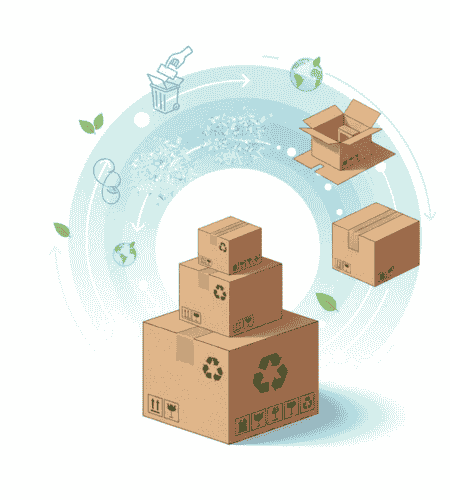
Recycled cardboard remains one of the most dependable sustainable packaging materials available today. It is produced from post consumer and post industrial paper waste, which significantly reduces the need for new raw materials. Compared to virgin cardboard, recycled cardboard requires less water and energy during production, helping lower overall carbon emissions.
Small businesses favor recycled cardboard because it balances cost, durability, and sustainability. It works well for shipping boxes, retail cartons, and food packaging while remaining easy to customize for branding. Because recycling systems for cardboard are already well established, customers can easily dispose of it responsibly.
In addition to its environmental and practical advantages, recycled cardboard also enhances brand reputation. Businesses that use recycled packaging demonstrate a commitment to sustainability, which resonates with eco-conscious consumers and can increase customer loyalty. Its versatility allows for creative printing and branding options, from logos to custom designs, without compromising its recyclable nature.
By choosing recycled cardboard companies not only contribute to a circular economy but also communicate responsibility and care for the planet to their customers. Recycled cardboard are better than Plastic box
- Made from post-consumer or post-industrial paper waste
- Reduces energy use and deforestation
- Strong enough for shipping and storage
- Widely accepted in recycling programs
- Cost-effective for small businesses
Kraft Paper: Natural Beauty With a Strong Eco Appeal
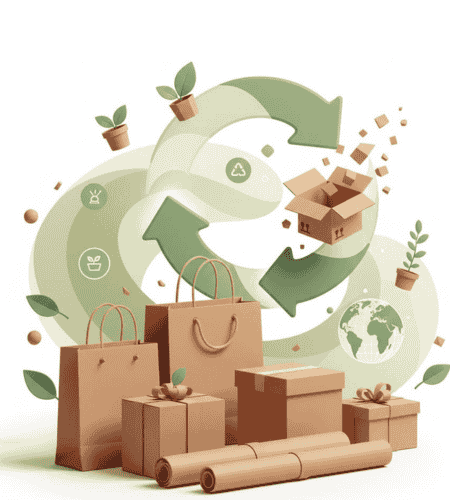
Kraft paper is valued for its natural appearance and environmentally responsible production process. Unlike heavily processed paper, kraft paper uses fewer chemicals, allowing it to biodegrade more easily in natural environments. Its brown, earthy texture instantly communicates sustainability to customers.
This material is commonly used for wrapping products, paper bags, food packaging, and protective fillers. Kraft paper also supports eco friendly printing methods such as soy based and water based inks, making it ideal for brands focused on low impact packaging.
In addition to being eco friendly and durable, kraft paper packaging offers a natural and premium look that appeals to conscious consumers. Its biodegradable nature ensures minimal environmental impact while providing versatile options for printing and branding. By using kraft paper, businesses showcase a commitment to sustainability and enhance their brand image in the eyes of environmentally aware customers
- Biodegradable and compostable
- Strong and tear-resistant
- Lightweight and flexible
- Ideal for minimalist branding
- Easily recyclable in paper streams
Glass Packaging: Safe, Premium, and Infinitely Reusable
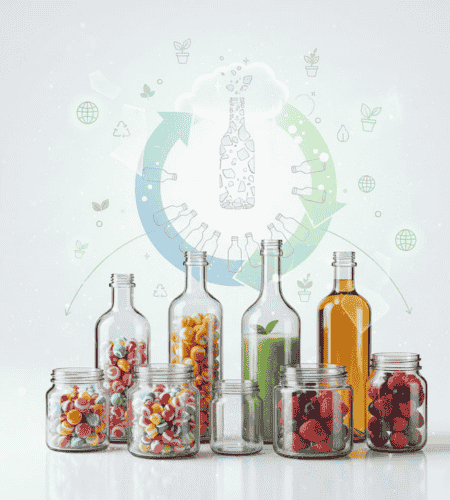
Glass packaging has been trusted for decades due to its purity and safety. It does not absorb odors, flavors, or chemicals, making it ideal for food, beverages, cosmetics, and wellness products. Glass also protects products from air and moisture, helping extend shelf life naturally.
From a sustainability perspective, glass stands out because it can be recycled endlessly without losing quality. Many customers also reuse glass jars and bottles at home, extending the life of the packaging beyond its original purpose. Glass packaging combines elegance with responsibility, making it a top choice for Sustainable Packaging Materials. Reduce waste while keeping your products safe.
Beyond its reusable and premium qualities, glass packaging reinforces a brand’s commitment to sustainability. Consumers recognize and value businesses that choose materials that can be cleaned, refilled, and recycled, which can increase trust and loyalty. With its elegant appearance and durability, glass packaging offers both functionality and a strong eco conscious brand statement, making it an ideal choice for companies aiming to align their products with environmental responsibility.
- 100% recyclable without quality loss
- Chemically inert and food-safe
- Enhances premium brand perception
- Excellent barrier for liquids and oils
- Reusable for household purposes
Aluminium Packaging: Lightweight, Strong, and Infinitely Recyclable
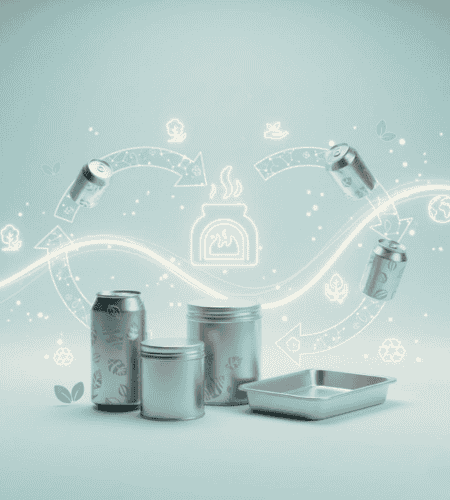
Aluminium is one of the most efficient packaging materials when it comes to recycling and energy savings. Recycling aluminium uses up to 95% less energy than producing it from raw materials.
This makes aluminium an environmentally strong choice with long-term benefits. Small businesses often use aluminium for tins, cans, cosmetic containers, and food packaging. Its lightweight nature reduces shipping costs, while its strength protects products from damage.
In addition to being lightweight and durable, aluminium packaging demonstrates a strong commitment to recycling. Its ability to be infinitely recycled without losing quality makes it a favourite among eco conscious businesses and consumers.
Aluminium is also highly resistant to corrosion, provides excellent barrier properties against moisture, light, and oxygen, and helps preserve the freshness and shelf life of products. It is non-toxic, easy to transport due to its light weight, and can be shaped into various forms, making it extremely versatile for cans, bottles, foils, and containers. By choosing aluminium, companies highlight their dedication to sustainability while providing practical, high-quality packaging that is both functional and environmentally responsible.
- Infinitely recyclable
- Lightweight and durable
- Strong protection against light and moisture
- Reduces shipping emissions
- Widely accepted in recycling systems
Bamboo Packaging: A Strong and Renewable Natural Solution
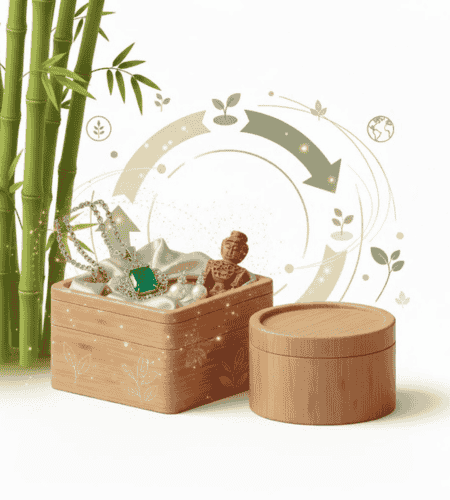
Bamboo is one of the fastest-growing plants in the world, making it a highly renewable resource. Some bamboo species can grow several feet in a single day, which allows continuous harvesting without damaging ecosystems. Bamboo packaging is increasingly used for food containers, cosmetic jars, luxury boxes, and cutlery. Its natural appearance appeals to eco conscious consumers, especially in the beauty, wellness, and lifestyle sectors.
Beyond its renewable and eco-friendly qualities, bamboo packaging offers remarkable strength and versatility. Bamboo grows rapidly without the need for pesticides or fertilizers, making it a highly sustainable raw material. Choosing bamboo for your products is a smart way to embrace Sustainable Packaging Materials. It’s renewable, biodegradable, and perfect for eco-friendly brands.
Its natural fibers are durable, lightweight, and biodegradable, ideal for boxes, containers, and wraps. Bamboo also has antimicrobial properties, which can help protect certain products, and can be easily shaped or laminated for custom packaging solutions.
By choosing bamboo, businesses demonstrate a commitment to environmental responsibility while providing aesthetically pleasing, durable, and sustainable packaging that appeals to eco-conscious consumers.
- Extremely fast-growing renewable resource
- Biodegradable under natural conditions
- Strong and durable material
- Minimal need for pesticides
- Premium, natural appearance
Mushroom Packaging (Mycelium): Innovative and Fully Compostable
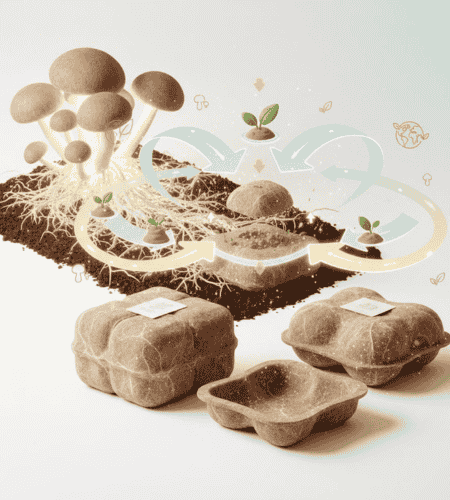
Mushroom packaging is made from mycelium, the root structure of fungi, combined with agricultural waste. This material grows naturally into custom shapes, requiring very little energy to produce. And better than plastic.
Mycelium packaging is especially effective for protecting fragile items during shipping. It replaces harmful plastic foams and breaks down naturally when composted, leaving no toxic residue behind.
One of the most significant advantages of mycelium packaging is its complete biodegradability. Scientifically, mycelium is a natural decomposer in ecosystems, meaning it can break down organic matter efficiently. When disposed of, mushroom packaging fully decomposes within weeks in soil or compost, returning nutrients back to the environment without leaving toxic residue or microplastics.
- Fully compostable at home
- Made from agricultural by products
- Excellent shock absorption
- Custom-moulded shapes
- Non-toxic and plastic-free
Corn-starch Packaging: A Practical Alternative to Plastic
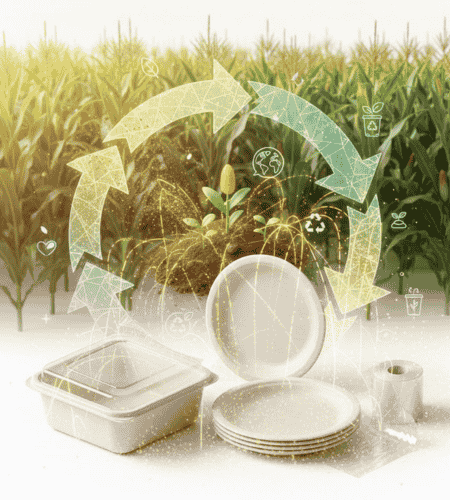
Corn-starch packaging is produced from natural plant starch and is designed to replace traditional plastic packaging. It looks similar to plastic but decomposes much faster in composting environments.
This material is widely used for food containers, cups, trays, and protective loose-fill packaging. It is especially popular among cafés, bakeries, and takeaway businesses aiming to reduce plastic waste.
Corn-starch packaging is a better alternative to plastic because it is plant-based, biodegradable, and environmentally friendly. Unlike traditional plastic made from fossil fuels, corn-starch packaging breaks down naturally under composting conditions and does not create harmful microplastics. It offers similar functionality to plastic for food and retail packaging while helping reduce carbon emissions and long term environmental pollution.
- Made from renewable plant sources
- Biodegradable and compostable
- Food-safe material
- Lightweight and flexible
- Reduces plastic dependency
Recycled Fabric Bags: Long-Lasting and Brand-Boosting
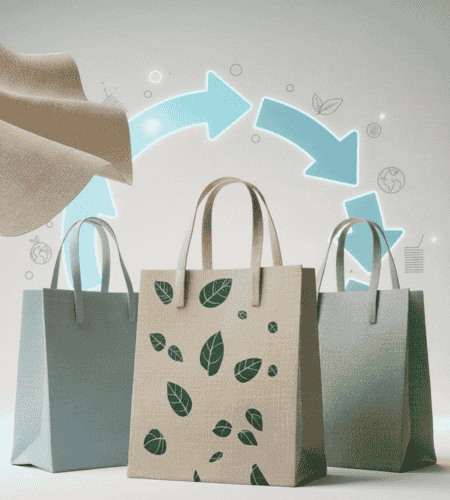
Recycled fabric bags are made from textile waste, cotton, jute, or recycled fibers that would otherwise be discarded. These bags are reusable, washable, and durable, making them ideal for retail and gift packaging. Customers often reuse fabric bags multiple times, giving brands repeated exposure. This makes them both a sustainable and marketing-friendly packaging option.
Recycled fabric bags are made from reclaimed textiles or recycled plastic fibers, reducing waste and resource use. Their durability supports repeated use, lowering overall carbon emissions while offering a reusable surface for sustainable brand promotion.
- Reduces textile waste
- Reusable and long-lasting
- Strong branding opportunity
- Washable and practical
- Supports circular economy
Paper-Based Bubble Wrap: Cleaner Shipping Protection
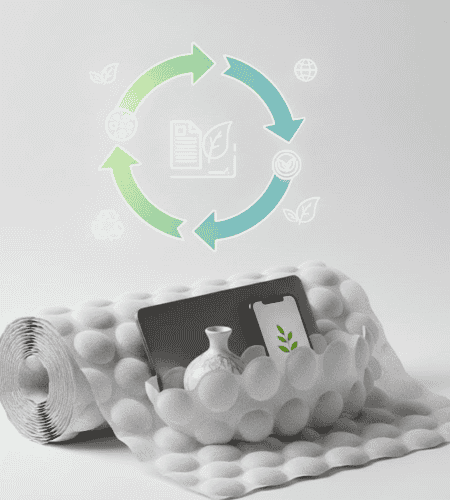
Paper-based bubble wrap uses a honeycomb paper structure to protect products during shipping. It offers similar cushioning to plastic bubble wrap without the environmental damage. This material is recyclable through standard paper systems and improves the unboxing experience for customers who prefer plastic-free packaging.
Paper based bubble wrap provides effective cushioning while eliminating plastic waste. Made from recyclable and biodegradable paper fibers, it offers reliable product protection during shipping and breaks down naturally, making it a cleaner and more sustainable alternative to plastic bubble wrap.
- Made from recycled paper
- Fully recyclable
- Effective shock absorption
- Plastic-free shipping solution
- Clean and professional appearance
Plant-Based Bioplastics: A Transitional Eco Solution
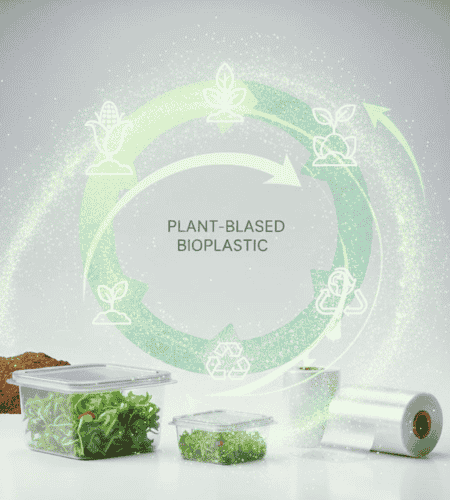
Plant-based bioplastics are created from renewable resources such as corn, sugarcane, or cassava. These materials help reduce dependence on fossil fuels and lower overall carbon emissions. While not all bioplastics are compostable at home, they represent a meaningful step toward reducing traditional plastic usage, especially for mailers and food packaging.
Plant-based bioplastics are made from renewable crops, reducing fossil fuel use and carbon emissions, making them a practical transition away from traditional plastic. Using plant based bioplastics helps brands adopt Sustainable Packaging Materials while reducing plastic waste. Eco-friendly and compostable, they protect both products and the planet.
- Derived from renewable plants
- Lower carbon footprint than petroleum plastics
- Suitable for flexible packaging
- Supports transition away from plastic
- Widely used in modern eco packaging
Conclusion
Sustainable packaging is not about being perfect overnight. It is about making better choices, step by step. Every material you replace, every piece of plastic you remove, and every responsible decision you make strengthens your brand and protects the environment. Small businesses that adopt sustainable packaging in 2026 are not just following a trend they are building trust, credibility, and long-term growth.
Start with one material, learn from customer feedback, and expand responsibly. Sustainability is a journey, and every step counts. By embracing eco-friendly materials, innovative designs, and thoughtful practices, businesses can reduce waste, lower carbon footprints, attract conscious consumers, and differentiate themselves in competitive markets. Each small action contributes to a healthier planet and a stronger, future-ready brand.

Meet Mary K, the talented author behind PackPaa. With a passion for innovative packaging solutions, Mary shares insights and expertise to elevate your business.