Table of Contents
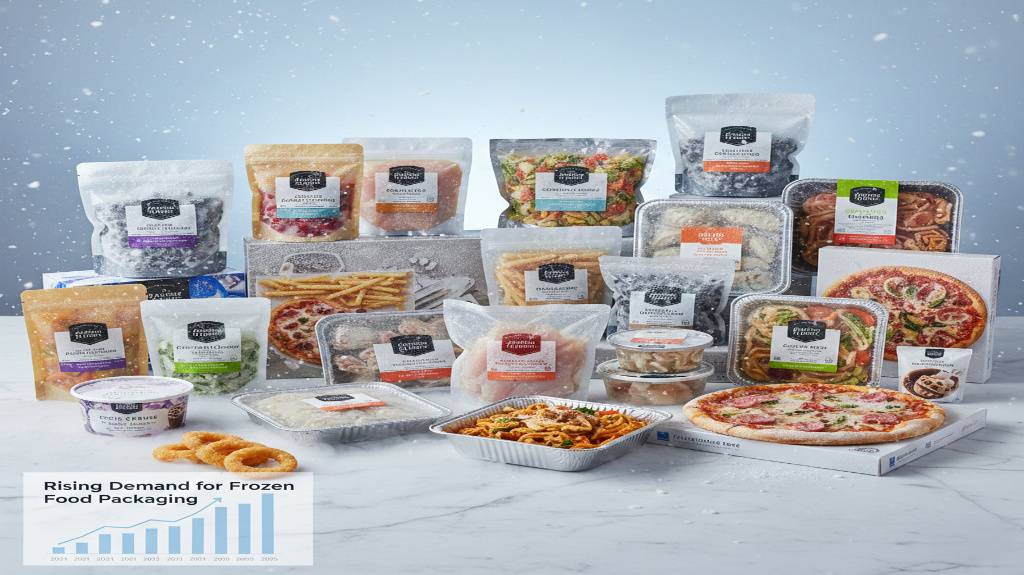
ToggleFrozen food packaging is an essential part of the modern food industry, ensuring that products stay fresh, safe, and easy to store. The Importance of Food Packaging lies in its ability to protect food from contamination, moisture, and freezer damage, making it safe for consumers.
Choosing the right type of packaging material, such as plastic, cardboard, foil, or vacuum-sealed options, affects quality, durability, and convenience. Like any system, frozen food packaging has pros and cons. It preserves food and improves storage but may involve costs or environmental concerns. Good packaging combines strong protection, clear labeling, and easy handling. Sustainability focuses on responsible management and reducing environmental impact.
While regulations ensure safety and legal compliance. Businesses must consider cost, usability, and performance when selecting packaging, and avoiding common mistakes improves quality, reduces waste, and builds customer trust. Overall, frozen food packaging is vital for safety, convenience, and long-term efficiency.
What Is Frozen Food Packaging?
Frozen food packaging refers to the materials and containers used to store, protect, and transport food that is meant to be kept frozen. This type of packaging is designed to maintain the food’s freshness, flavor, and nutritional value while preventing contamination and spoilage.
It can include various materials such as plastic, cardboard, foil, or biodegradable options. The packaging also provides convenience for consumers, allowing for easy storage and portion control. Proper frozen food packaging helps in reducing waste by keeping food safe for longer periods and preventing damage during transportation.
Understanding the food packaging importance is crucial for both manufacturers and consumers, as it ensures that food reaches the end user in perfect condition. Whether it is for vegetables, meat, ready-to-eat meals, or desserts, frozen food packaging plays a vital role in maintaining quality, safety, and hygiene. Modern packaging also focuses on sustainability and eco-friendly options to reduce environmental impact.
Why Frozen Food Packaging Is Necessary
Frozen food packaging is essential for protecting food from spoilage, contamination, and freezer burn. Without proper packaging, frozen foods can lose their texture, taste, and nutritional value over time. Packaging also makes it easier to store and organize food in freezers, whether at home, in restaurants, or during transportation.
Another important reason is safety; the right packaging prevents bacteria, moisture, and odors from affecting the food. Proper frozen food packaging can also help to reduce food packaging waste by keeping items fresh longer, meaning less food is thrown away due to spoilage.
It also allows manufacturers and retailers to minimize excess packaging materials while still ensuring protection. Overall, packaging is not just about appearance or convenience. it plays a crucial role in preserving quality, extending shelf life, and ensuring that consumers receive safe, high-quality frozen foods every time they use them.
- Enhancing the visual appeal of frozen food products on shelves.
- Providing clear labeling for ingredients, expiration dates, and cooking instructions.
- Allowing for portion control and convenient serving sizes.
Types of Frozen Food Packaging Materials
Frozen food can be stored in a variety of packaging materials, product packaging plays a key role in keeping it safe, fresh, and easy to transport. The choice of material depends on the type of food, storage duration, and environmental considerations. Common materials include plastic, which is lightweight, durable, and resistant to moisture. Plastic trays, bags, and pouches are widely used for vegetables, meat, and ready-to-eat meals.
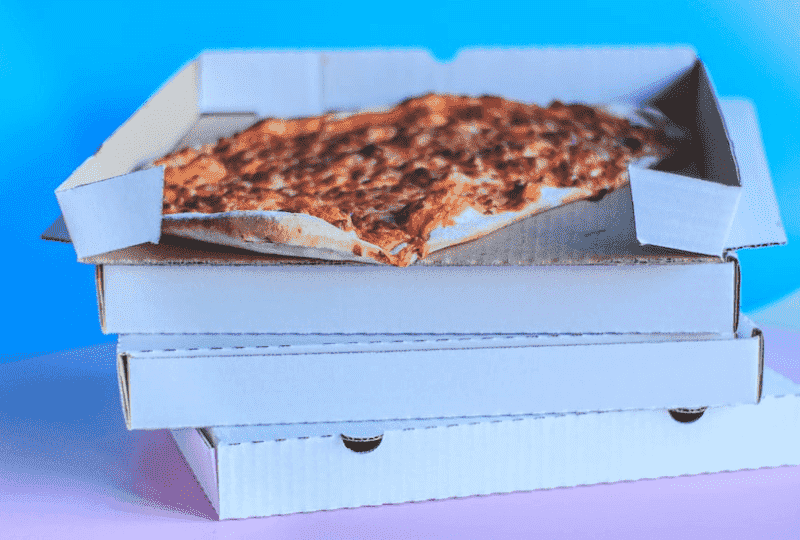
Cardboard and paper-based packaging are popular for boxed frozen foods such as pizzas, desserts, and bakery items. They are easy to print on and can be recycled or made from sustainable sources. Foil packaging is often used for items that need heat resistance or airtight sealing, such as ready meals or pre-cooked foods.Many frozen foods also use the Mylar bags because these bags provide strong protection against air, light, and moisture which helps extend shelf life.
Other materials include biodegradable and compostable options made from plant-based fibers. These are becoming increasingly popular due to environmental concerns. Vacuum-sealed packaging is also used to extend shelf life by removing air and preventing freezer burn.
Choosing the right frozen food packaging material ensures product quality, safety, and convenience. It also helps manufacturers meet legal requirements, reduce waste, and provide consumers with a reliable and sustainable food experience.
Pros and Cons of Frozen Food Packaging
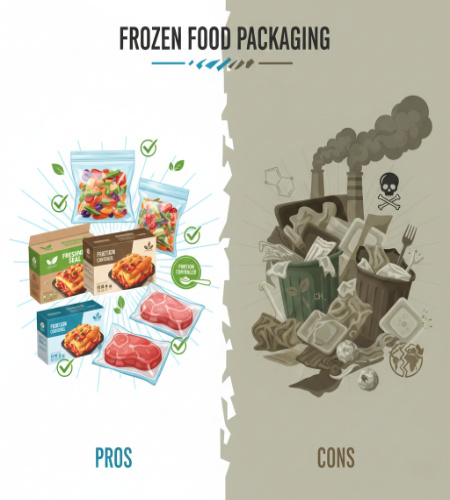
Frozen food packaging comes with many advantages, but it also has some challenges. Understanding both sides helps businesses and consumers make better decisions.
Pros of Frozen Food Packaging
Frozen food packaging provides many benefits. It keeps food fresh, safe, and nutritious for longer periods. Packaging prevents contamination, freezer burn, and moisture damage. It also allows for easy storage and transport, making it convenient for homes, restaurants, and retailers. Proper packaging helps with portion control and clear labeling, including ingredients, expiration dates, and cooking instructions. Additionally, it enhances product presentation and branding, helping consumers identify and choose products more easily.
- Makes it easier to transport frozen food over long distances without damage.
- Allows for creative packaging designs that can attract more customers.
- Supports portion packaging for meal prep and single servings.
Cons of Frozen Food Packaging
Despite its advantages, frozen food packaging has some drawbacks. Some materials, especially plastics and non-recyclable options, can harm the environment if not properly disposed of. The cost of high-quality packaging may be high for manufacturers, and poorly designed packaging can create unnecessary waste. These factors highlight the environmental impact of food packaging, which must be considered carefully when selecting materials and designs.
- Some packaging materials may take a long time to decompose, affecting landfills.
- Excessive use of packaging can increase storage space requirements and shipping costs.
- Certain packaging may leach chemicals if exposed to high freezer temperatures or prolonged storage
Key Features of Good Frozen Food Packaging
Good frozen food packaging should have several important features to ensure food safety, quality, and convenience. First, it must be strong and durable to protect food from damage during transport and storage. The packaging should be airtight and moisture-resistant to prevent freezer burn and maintain freshness. Clear labeling is another key feature, showing ingredients, expiration dates, storage instructions, and cooking guidelines. Food-grade safety is another essential feature.
Packaging materials must be safe for direct contact with food and free from harmful chemicals. Proper labeling also plays a role in safety and consumer trust, which links closely with Branding. A good packaging design should also consider customer convenience, such as easy-to-open lids, resealable options, and portion control.
Additionally, modern packaging often includes branding and attractive designs to make products more appealing on shelves.For businesses like restaurants or sweets providers, custom chocolate bar packaging, restaurant packaging solutions allow them to create a unique identity and meet specific storage or portion requirements.
Sustainability is becoming increasingly important as well. Using recyclable, biodegradable, or reusable materials not only reduces environmental impact but also improves brand reputation. Overall, the best frozen food packaging balances safety, convenience, durability, and eco-friendliness.
Sustainability in Frozen Food Packaging
Sustainability in frozen food packaging is about improving how packaging is managed throughout its entire lifecycle, not about the materials themselves. It focuses on reducing energy use during production, lowering carbon emissions in transportation, and improving efficiency in storage and distribution. Many companies work on optimizing package sizes to reduce empty space, which cuts fuel consumption and lowers shipping impact.
Sustainability also includes better waste management systems, such as improved collection, sorting, and recycling processes after consumer use.Training employees and educating consumers on proper disposal practices plays an important role as well. Businesses may also conduct environmental audits to track their packaging footprint and set measurable sustainability goals.
By improving operations, logistics, and accountability, companies can reduce environmental pressure while maintaining food safety and performance. This approach supports long-term environmental responsibility without changing the core function of frozen food packaging.
Another key part of sustainability is the use of recyclable and recycled materials. Packaging made from recycled content or materials that can be recycled after use helps reduce landfill waste. Understanding the meaning of recycled Packaging is important here, as it helps businesses choose materials that support a circular economy.
Regulations & Food Safety Standards
Frozen food packaging must follow strict regulations and food safety standards to protect consumer health. These rules ensure that packaging materials are safe for direct contact with food and do not release harmful chemicals at low temperatures. Regulatory bodies require proper labeling, including ingredients, expiration dates, storage instructions, and allergen information.
Packaging must also prevent contamination, leakage, and freezer burn during storage and transport. In many regions, food safety laws also cover the use of recycled materials. Understanding the recycling is important because only approved and food-grade recycled materials can be used for frozen foods. Manufacturers must meet hygiene, quality, and traceability standards before products reach the market.
Following these regulations helps businesses avoid legal issues while ensuring frozen foods remain safe, reliable, and high quality for consumers. Following regulations does more than ensure safety. It also builds brand trust. Brands that follow safety and environmental rules show responsibility, which connects with the Importance of Eco-Friendly packaging for brands in today’s market.
How to Choose the Right Frozen Food Packaging
Choosing the right frozen food packaging is an important decision that affects food quality, safety, and customer satisfaction. The first step is understanding the nature of the food product. Different frozen foods, such as vegetables, meat, or ready meals, require different levels of protection against moisture, air, and freezer burn.
Packaging should be durable enough to withstand freezing temperatures, stacking, and long-distance transportation without tearing or leaking. Ease of use is another key factor. Packaging should be easy to open, reseal if possible, and store efficiently in freezers. Clear and accurate labeling is essential, as it helps consumers understand ingredients, storage instructions, and expiration dates.
Businesses should also think about sustainability and select recyclable or environmentally friendly materials to meet modern consumer expectations. Cost planning plays a major role in packaging decisions. Reviewing packaging cost 2024 trends allows businesses to compare options and choose packaging that fits their budget without compromising quality.
The best packaging solution balances protection, usability, compliance, sustainability, and cost, ensuring long-term success for both businesses and consumers. Lastly, businesses should consider logistics and distribution. Packaging must handle transportation, stacking, and storage without damage. For online and large-scale distribution, packaging standards similar to frustration-free packaging can help improve efficiency and customer satisfaction.
Common Mistakes to Avoid
One common mistake in frozen food packaging is choosing the wrong material. Many businesses use thin or low-quality packaging, which leads to freezer burn, leaks, and spoiled food. The solution is to select durable, moisture-resistant materials that are tested for freezing conditions. Another frequent mistake is poor sealing. Weak seals allow air and moisture to enter, reducing food quality.
Using proper sealing techniques and regular quality checks can easily solve this issue. Incorrect or unclear labeling is also a real-life problem. Missing expiration dates or storage instructions confuse customers and may cause safety risks. This can be avoided by following labeling standards and double checking all printed information. Over packaging is another mistake, where excessive material increases cost and waste.
The solution is smart package design that uses only what is necessary. Many brands also ignore sustainability, which can harm reputation and customer trust. Switching to recyclable or eco friendly options helps fix this problem. By avoiding these mistakes and applying practical solutions, businesses can improve product quality, reduce waste, and build stronger customer confidence.
Conclusion
Frozen food packaging plays an important role in keeping food safe, fresh, and easy to store. It protects food from damage, spoilage, and contamination while extending shelf life. Different packaging materials are used based on food type, storage time, and safety needs.
The main benefits include convenience, food safety, and longer storage, while drawbacks include cost and environmental impact. Good packaging should be strong, well-sealed, clearly labeled, and easy to handle. Sustainable packaging focuses on reduced waste and responsible disposal. Following regulations and choosing the right packaging helps businesses improve quality, reduce waste, and build customer trust.

Meet Mary K, the talented author behind PackPaa. With a passion for innovative packaging solutions, Mary shares insights and expertise to elevate your business.